How to Store Fuse Beads: Organization Systems That Actually Work
Tame your fuse bead chaos with proven storage systems. Covers sorting by color vs. project, container types, workspace setup, and budget-friendly DIY organization hacks.
Beginner5 min read
The Bead Storage Problem Every Crafter Faces
If you've been crafting with fuse beads for more than a month, you know the problem: beads everywhere. Open bags, mixed colors, stray beads on the floor, and no idea which shade of green is which. Good storage isn't just about tidiness — it directly affects your crafting speed and enjoyment. When you can find the exact color you need in 5 seconds instead of digging through a bin for 5 minutes, you craft more and stress less.
The average fuse bead crafter owns 2,000-20,000 beads across 15-40 colors. Without a system, this becomes unmanageable. With the right system, everything is visible, accessible, and sorted — making each project smoother and more enjoyable.
Storage Container Types Compared
Four main storage approaches, each with pros and cons:
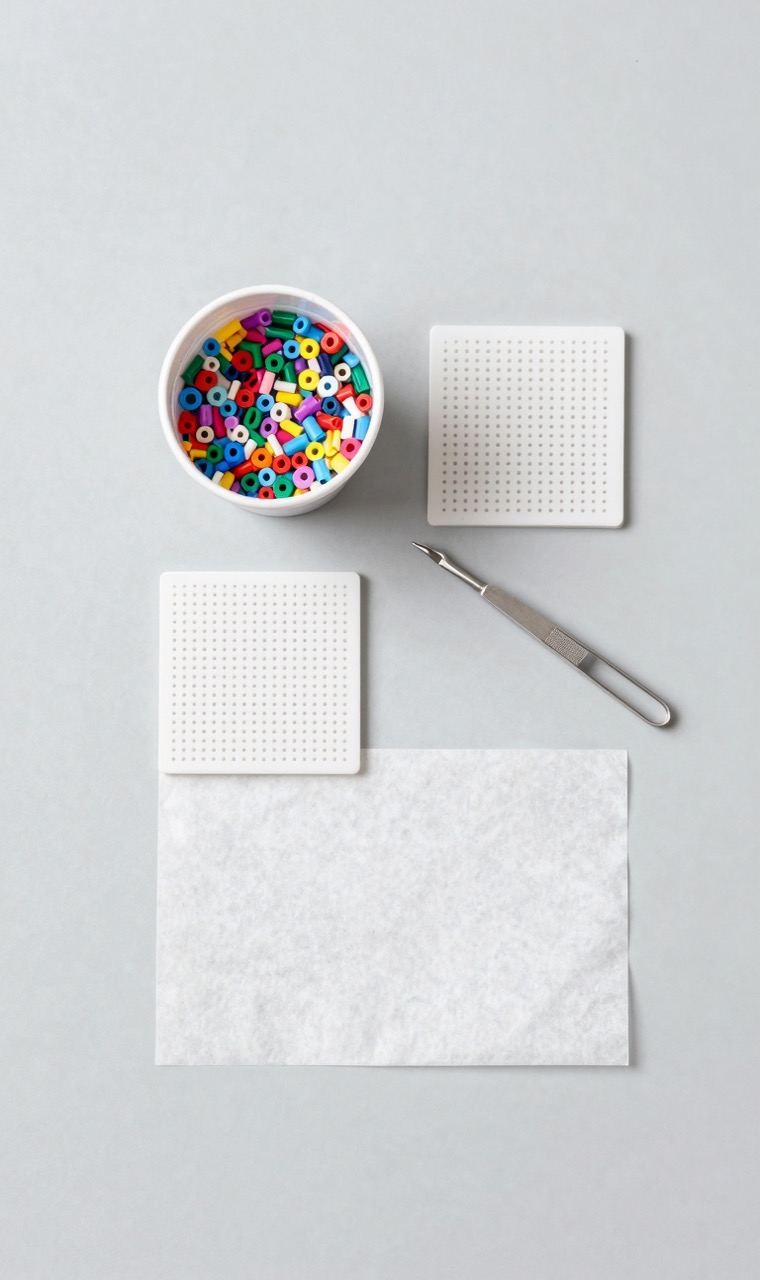
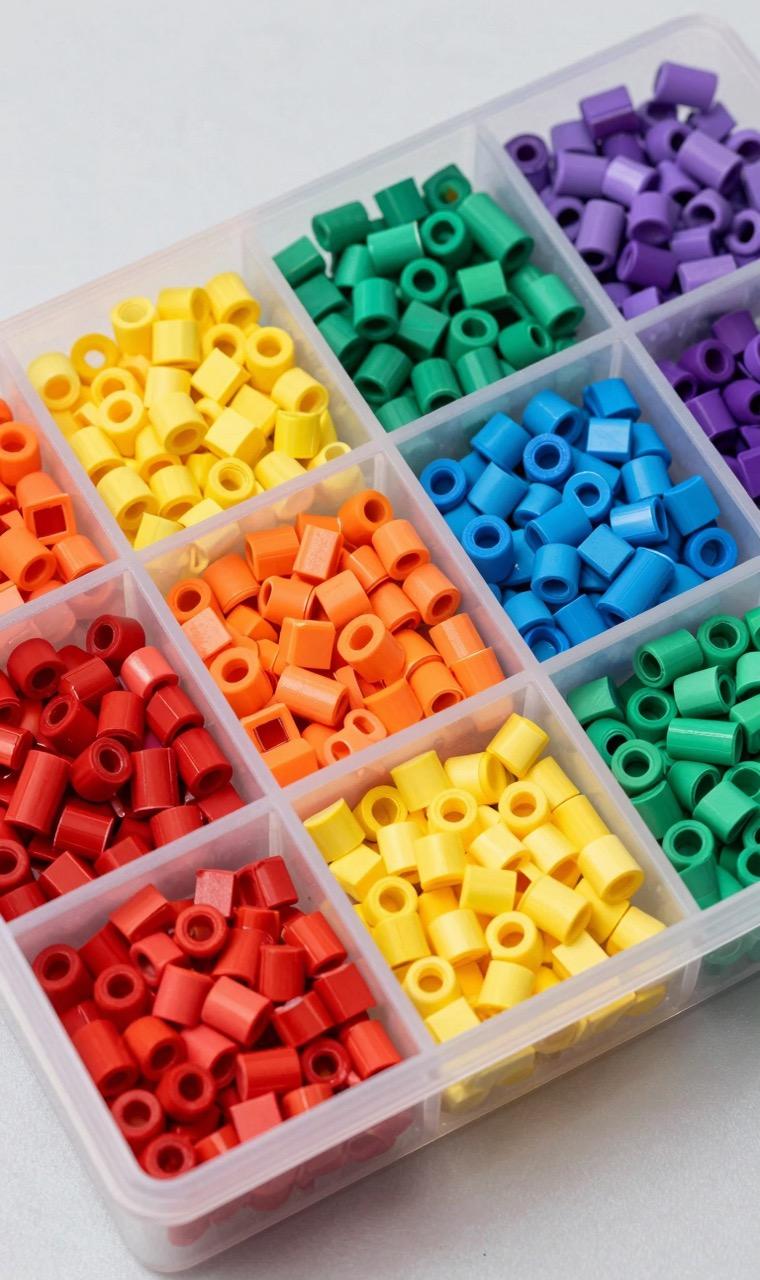
1. Tackle box / compartment boxes (best overall): clear plastic boxes with 15-30 adjustable compartments. Each compartment holds one color. Stackable, see-through, and portable. $8-15 at craft/hardware stores. Look for boxes with latching lids so beads don't mix if tipped.
2. Screw-top jars / test tubes: individual small jars for each color. Best for displaying your collection visually on a shelf. Slower to access (screw/unscrew each one). $0.30-0.80 per jar. Good for advanced crafters with 30+ colors.
3. Zip-top bags in a bin: cheapest option. Sort beads by color into small zip-top bags, store bags upright in a shoebox or storage bin. Works but not stackable and hard to see colors at a glance. $5 total.
4. Drawer cabinets (Akro-Mils style): wall-mounted or bench-top cabinets with 20-50 small pull-out drawers. The most professional setup. Drawers pull out for easy access and can be labeled. $25-50 on Amazon. Best for serious crafters with large collections.
Recommendation: Start with compartment boxes (#1). They offer the best balance of cost, accessibility, and expandability for most crafters.
Sorting Strategies: By Color vs. By Project
Two fundamental sorting philosophies:
Sort by color (recommended for 90% of crafters): Every color in its own compartment, organized in rainbow order (red, orange, yellow, green, blue, purple, pink, brown, gray, black, white). Add sub-sorts within colors (light blue, medium blue, dark blue in adjacent compartments). This makes finding any color instant and works for all projects.
Sort by project: Pre-portion beads for specific projects into individual bags. Open the 'cactus magnet' bag and it has exactly the green, brown, pink, and white you need. Faster per-project setup, but you need to re-sort beads when starting something new. Works best for crafters who make the same 5-10 projects repeatedly.
Hybrid approach: sort primary colors in compartment boxes (general use) and keep 3-5 project-specific bags pre-portioned for favorite recurring projects. This gives you both flexibility and convenience.
Frequently Asked Questions
How long do fuse beads last in storage?
Fuse beads (made of food-grade LDPE plastic) last indefinitely when stored in a cool, dry place away from direct sunlight. There are 20-year-old Perler bead collections still perfectly usable. The main risks are: sunlight fading (keep away from windows), heat warping (keep below 40°C/104°F), and moisture (use silica gel packets in humid climates). No expiration date.
Related Links
Ready to create your own patterns?
Open the Free Pattern MakerShare: