Menu

FuseBeads Hub © 2026

10 Easy Fuse Bead Patterns for Beginners: Simple Designs & Tips

Discover 10 easy fuse bead patterns perfect for beginners. Includes bead counts, difficulty tips, and step-by-step guidance for cute and simple projects.

Iniciante5 min read de leitura

Getting Started with Fuse Beads: Materials and Basics

Fuse beads, also known as Perler beads, are a fantastic craft for beginners because they require minimal supplies and yield satisfying results quickly. To start, you'll need a pegboard (the standard square board is perfect), a pack of midi-size beads (5mm) in assorted colors, ironing paper, and an iron. A pair of tweezers can help with precise placement, especially for small patterns. If you're new to the craft, our beginner's guide to fuse beads covers everything from choosing your first beads to understanding how they melt. For a smooth experience, consider using a recommended set of fuse bead tools that includes everything you need. Before diving into patterns, it's important to understand the ironing process. The key is to apply gentle, even pressure with a medium-hot iron (no steam) over the ironing paper until the beads fuse together. Over-ironing can flatten the beads too much, while under-ironing may cause the project to fall apart. Our detailed guide on how to iron fuse beads walks you through the perfect technique. Also, make sure your workspace is well-lit and comfortable, as you'll be spending time placing tiny beads. With these basics covered, you're ready to tackle the easy patterns ahead. When selecting beads, stick to a limited color palette to keep things simple. Many beginners find that starting with a few basic colors—like black, white, red, blue, and yellow—is enough for the patterns in this article. If you're unsure about color combinations, our fuse bead color guide offers helpful advice on pairing hues. Remember, the goal is to have fun and build confidence, so don't worry about making mistakes. Every project is a learning opportunity!

10 Easy Fuse Bead Patterns for Beginners

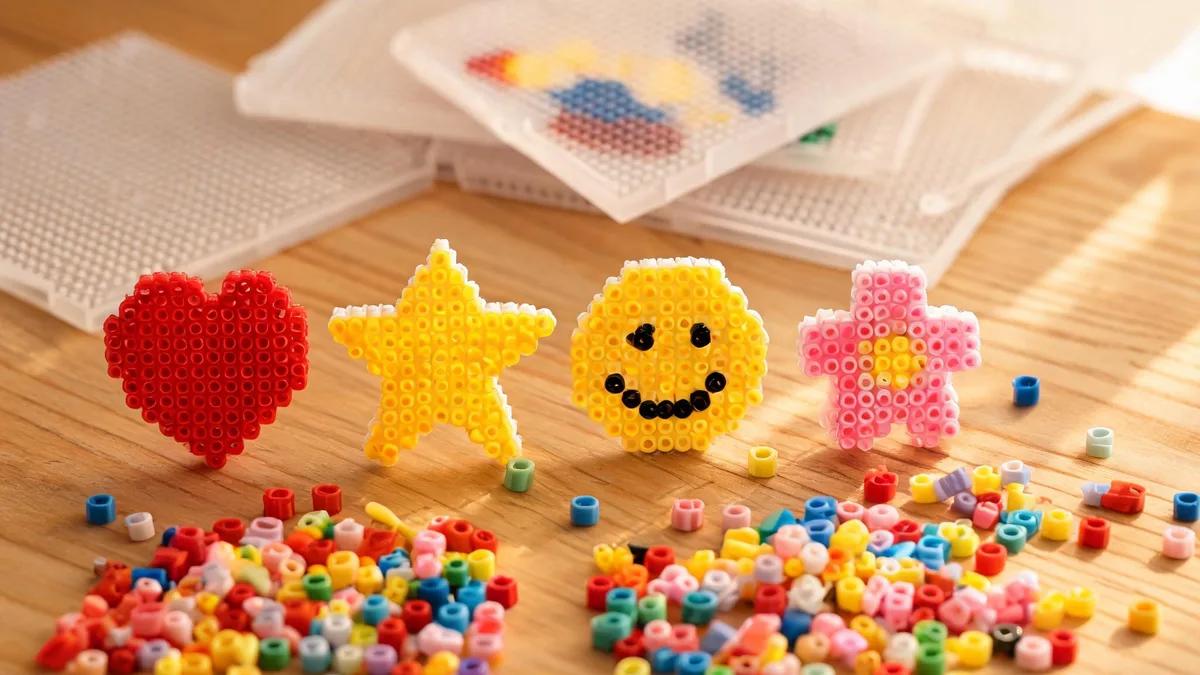
Here are ten beginner-friendly fuse bead patterns that use simple shapes and a limited number of beads. Each pattern includes an approximate bead count and difficulty level to help you choose your first project. 1. **Heart** (Difficulty: Easy, ~30 beads): A classic symbol of love, the heart is perfect for Valentine's Day or just because. Start by creating a symmetrical heart shape on your pegboard. Use red or pink beads for a traditional look, or experiment with other colors. This pattern is great for making coasters or ornaments. 2. **Star** (Difficulty: Easy, ~25 beads): A five-pointed star is simple and versatile. Use yellow or gold beads for a shining star, or any color you like. This pattern works well for wall art or as a decoration on a greeting card. 3. **Smiley Face** (Difficulty: Easy, ~20 beads): Bring a smile to someone's face with this cheerful pattern. Use yellow beads for the face and black for the eyes and mouth. It's a quick project that's perfect for keychains. 4. **Flower** (Difficulty: Easy, ~35 beads): A simple flower with five petals and a center is a delightful springtime project. Choose bright colors like pink, purple, or blue for the petals and yellow for the center. This pattern can be turned into a magnet or a brooch. 5. **Rainbow** (Difficulty: Easy, ~40 beads): A rainbow is a colorful and happy pattern. Arrange beads in arcs of red, orange, yellow, green, blue, and purple. It's a bit larger but still very manageable. Use it to brighten up a photo frame or as a standalone piece. 6. **Cat** (Difficulty: Easy, ~30 beads): A simple cat face with pointy ears and whiskers is adorable and easy to make. Use black or orange beads for the head and contrasting colors for details. This is a favorite among animal lovers. 7. **Butterfly** (Difficulty: Easy, ~30 beads): A symmetrical butterfly with colorful wings is a beautiful beginner pattern. Use two or three colors for the wings and a contrasting color for the body. It makes a lovely ornament or suncatcher. 8. **Ice Cream Cone** (Difficulty: Easy, ~25 beads): This sweet treat pattern features a cone and a scoop of ice cream. Use brown for the cone and pink or white for the ice cream. Add a cherry on top with a red bead. It's a fun project for kids. 9. **Rocket** (Difficulty: Easy, ~30 beads): Blast off with this simple rocket ship pattern. Use silver or gray for the body, red for the fins, and blue for the window. It's perfect for space-themed cool designs. 10. **Fish** (Difficulty: Easy, ~25 beads): A cute fish with a triangular tail and an eye is a quick and satisfying pattern. Use orange or blue for the body and a contrasting color for the eye. This pattern can be used to make fidget toys or decorations. Each of these patterns is designed to be completed in under 30 minutes, making them ideal for short crafting sessions. Remember to use a pegboard that suits the size of your pattern; the standard square board works for all of these. For more inspiration, check out our collection of things to make with Perler beads.

Tips for Perfecting Your Fuse Bead Projects

Even with easy patterns, a few tips can make your projects look more polished. First, always use ironing paper to prevent beads from sticking to the iron. Second, iron in a circular motion with gentle pressure to ensure even melting. Third, let your project cool completely before removing it from the pegboard to avoid warping. For more detailed instructions, refer to our ironing guide. Another tip is to organize your beads by color in small containers or a bead organizer. This saves time and keeps your workspace tidy. If you're working on multiple projects, consider storing beads in labeled jars or a storage solution to avoid mix-ups. Also, keep a pair of tweezers handy for placing beads in tight spots and for removing any that are misplaced. Finally, don't be afraid to experiment with different bead types. While midi beads are standard for beginners, you can also try mini beads for more detailed patterns or 3D projects once you gain confidence. And if you're looking for gift ideas, many of these patterns can be turned into handmade presents. Remember, practice makes perfect, and each project will improve your skills.

Frequently Asked Questions

Perguntas Frequentes

What size beads should beginners use?

Beginners should start with midi-size beads (5mm) because they are easier to handle and less fiddly than mini beads. Midi beads are also the most common and widely available, making them perfect for learning the basics. Once you're comfortable, you can try mini beads for more detailed designs.

How do I prevent my fuse bead project from curling?

Curling usually happens when the iron is too hot or you apply uneven pressure. To prevent it, use a medium-hot iron without steam, apply gentle and even pressure, and iron in a circular motion. Also, let the project cool completely under a heavy book or flat object after ironing to help it stay flat.

Can I use any iron for fuse beads?

Yes, a regular household iron works fine, but make sure to use it on a medium setting without steam. Steam can cause the beads to bubble or not melt properly. It's also a good idea to use a dedicated ironing paper or parchment paper to protect your iron and the beads.

How many beads do I need for a small project?

The number of beads varies by pattern, but most beginner patterns use between 20 and 40 beads. For example, a simple heart uses about 30 beads, while a star uses around 25. It's always a good idea to have extra beads on hand in case you lose some or want to experiment with colors.

Pronto para criar seus próprios padrões?

Abrir o criador gratuito
Compartilhar: