메뉴

FuseBeads Hub © 2026

Fuse Bead Art for Kids: Safety Tips and Simple Projects

Discover safe and fun fuse bead projects for kids. Learn age-appropriate crafts, safety tips, and educational benefits of fuse beads for kids.

초급5 min read 분

Why Fuse Beads Are a Perfect Craft for Kids

Fuse beads, also known as Perler beads, Hama beads, or melty beads, are small plastic beads that can be arranged on a pegboard and then fused together with heat to create colorful pixel art. They offer a wonderful blend of creativity, fine motor skill development, and pure fun. For children, the appeal is immediate: they can transform simple beads into animals, characters, or abstract designs. But beyond the fun, fuse beads for kids provide educational benefits that parents and educators love. Working with fuse beads helps children develop hand-eye coordination, color recognition, and patience. It also encourages planning and problem-solving as they map out their designs. The repetitive motion of placing beads can be calming and therapeutic, making it a great activity for kids who need a focus outlet. Whether you're a parent looking for a rainy-day activity or a teacher seeking a classroom project, fuse beads are an excellent choice. Before diving in, it's important to understand that not all fuse bead projects are suitable for every age. With proper supervision and age-appropriate guidance, even young children can enjoy this craft safely. In this article, we'll cover safety tips, simple projects, and how to make the most of your fuse bead experience with kids.

Essential Safety Tips for Fuse Beads with Kids

Safety is the top priority when crafting with children. The main risks with fuse beads are choking hazards from small beads and burns from the ironing process. Always supervise children, especially those under six, and keep beads away from mouths. For a comprehensive guide, check out our fuse beads safe for kids article. Choose beads that are non-toxic and meet safety standards; most major brands like Perler, Hama, and Artkal are safe when used as intended. Ironing should always be done by an adult or with close adult supervision. Use a low-heat setting (no steam) and place parchment paper or ironing paper between the iron and the beads. Never let a child handle a hot iron. Allow the fused project to cool completely before handling. Also, be mindful of small parts around pets and younger siblings. Store beads in labeled containers to prevent spills and accidental ingestion. Another safety consideration is the workspace. Set up a dedicated area with good ventilation, especially when ironing, as melting plastic can release fumes (though minimal with proper temperature). Use a heat-resistant surface and keep water nearby just in case. Teach children to wash their hands after crafting to remove any residue. By establishing clear rules and routines, you can ensure a safe and enjoyable experience for everyone.
Essential Safety Tips for Fuse Beads with Kids

Age-Appropriate Fuse Bead Projects for Kids

When selecting projects, consider the child's age, dexterity, and attention span. For ages 4-6, start with large beads and simple shapes like hearts, stars, or basic animals. These are easier to handle and less frustrating. Our fuse beads for beginners guide offers great starter patterns. For ages 7-9, children can tackle more detailed designs like keychains, small figures, or seasonal ornaments. Check out our how to make perler bead keychains tutorial for a fun project. Ages 10 and up can handle complex pixel art, 3D builds, and even jewelry. They might enjoy creating coasters, ornaments, or wall art. For inspiration, browse our ideas/cool section. Remember to match the project to the child's skill level to keep it enjoyable. Younger kids may need help with ironing, while older kids can assist with sorting and organizing beads. Simple projects like fuse bead magnets are perfect for beginners and make great gifts. For a seasonal twist, try fuse bead Christmas ornaments. And if your child loves fidget toys, our fuse bead fidget toys guide has you covered. The key is to start simple and gradually increase complexity as skills grow.

Step-by-Step: A Simple Fuse Bead Project for Kids

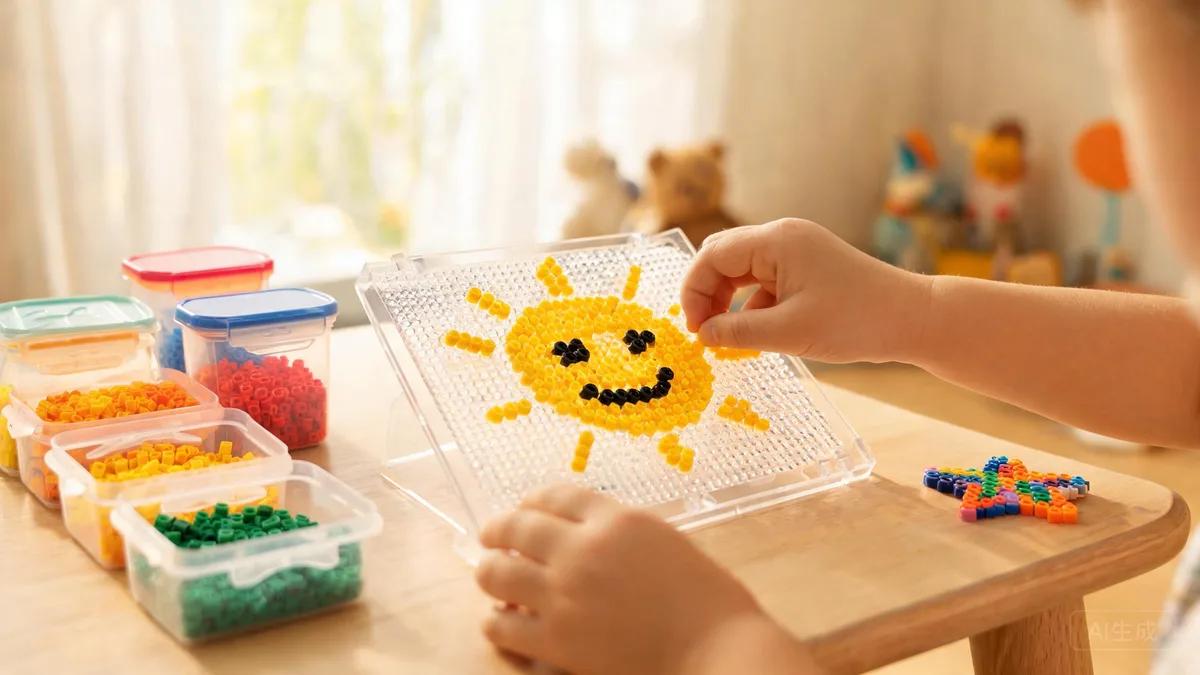
Let's create a simple heart-shaped coaster, perfect for young crafters. You'll need: a square pegboard, fuse beads in two or three colors, tweezers (optional), ironing paper, an iron, and a flat heat-resistant surface. Start by placing the pegboard on a flat surface. Show your child how to pick up beads with their fingers or tweezers and place them on the pegs following a pattern. For a heart, outline the shape first, then fill in the center. Encourage creativity—there's no wrong way! Once the design is complete, an adult should preheat the iron to a low setting (no steam). Place the ironing paper over the beads and gently iron in circular motions for about 10-15 seconds, until the beads are fused. Let it cool for a minute, then flip the coaster, cover with paper, and iron the other side for another 10-15 seconds. This ensures both sides are sealed. Allow to cool completely before removing from the pegboard. For more detailed ironing instructions, see our how to iron fuse beads guide. This project teaches patience, color patterns, and spatial reasoning. It's also a great opportunity to talk about shapes and symmetry. Once kids master the heart, they can move on to more complex designs like animals or even 3D figures with our 3D fuse bead tutorial.
Step-by-Step: A Simple Fuse Bead Project for Kids

Educational Benefits and Tips for Parents

Fuse beads are more than just a craft; they're a stealthy educational tool. As children sort beads by color, they practice categorization and color theory. Following patterns enhances math skills like counting and symmetry. Designing original pieces boosts creativity and spatial awareness. For a deeper dive into color selection, see our fuse bead color guide. Additionally, the focused nature of bead placement can improve concentration and mindfulness, helping kids unwind after a busy day. To maximize the experience, create a dedicated craft station with good lighting and comfortable seating. Keep beads organized by color in small containers or a tackle box—this also makes cleanup easier. Encourage your child to plan their design on paper first, which builds planning skills. Celebrate their finished pieces by displaying them or turning them into gifts. For gift ideas, check our Perler bead gift ideas. Finally, be patient and let your child lead. Some days they may want to follow a pattern; other days they may freestyle. Both are valuable. Remember that the goal is fun and exploration, not perfection. With a little preparation and supervision, fuse beads can become a beloved family activity that sparks joy and learning for years to come.

자주 묻는 질문

What age is appropriate for fuse beads?

Most manufacturers recommend fuse beads for ages 5 and up due to small parts. However, with close supervision, younger children can participate using larger beads and simpler designs. Always ensure children do not put beads in their mouths. For a detailed age guide, see our fuse beads safe for kids article.

Are fuse beads toxic when melted?

When ironed at the recommended low temperature, fuse beads do not release toxic fumes. However, overheating can cause plastic to burn and emit harmful vapors. Always use a low setting and good ventilation. Major brands like Perler, Hama, and Artkal are made from non-toxic materials like polyethylene. For more on safety, read our fuse beads safe for kids guide.

How do I store fuse beads to keep them safe?

Store fuse beads in airtight containers, sorted by color. Keep them out of reach of young children and pets. Label containers for easy identification. For organization tips, check our how to store fuse beads guide. A tackle box or bead organizer works great.

What are some easy fuse bead projects for young kids?

Simple projects include hearts, stars, smiley faces, and basic animal shapes. These use few beads and are quick to complete. For more ideas, see our fuse beads for beginners guide and things to make with perler beads.

나만의 패턴을 만들 준비가 되셨나요?

무료 패턴 메이커 열기
공유: